

Should You Build Your Own Fence or Hire a Fence Company?
Thinking about installing your own fence to save money? You’re not alone. It’s one of the most common questions we hear, and after 35+ years installing fences across metro Atlanta, we’ll give you an answer most fence companies won’t: sometimes DIY makes sense. But “cheaper on paper” and “cheaper in real life” aren’t always the same thing. Homeowners underestimate what a fencing project actually involves — the time, the tools, the physical demands, and the hidden costs that show up halfway through.
So here’s the honest breakdown. Real numbers, real labor, and a straight answer on when the DIY route works and when hiring professionals is the smarter money.
Is DIY Fence Installation Cheaper Than Hiring a Pro?
Yes, usually. A DIY fence installation typically saves 30–50% compared to professional installation — if everything goes right. For a standard 150-linear-foot wood privacy fence, that’s real money.
The catch? “If everything goes right” is doing a lot of work in that sentence. Uneven terrain, Georgia clay, tree roots, a gate that won’t stay square — any one of these can shrink your savings fast. And a fence that’s not installed correctly usually costs more to fix than it would’ve cost to install right the first time.
Let’s run the actual math.
What DIY Fence Installation Really Costs
One thing before we get into the numbers: every fence project is unique. Your yard, your terrain, your material choices, and your local requirements all move the needle — so treat everything below as directional, not a quote. Same goes for hiring it out: every fence company prices its own way based on crew, materials, and what’s included, so numbers will vary from one contractor to the next. The only way to know what your fence costs is to measure your fence line and get real bids. This guide is here to make sure you walk into that conversation knowing what the numbers should look like.
Most cost comparisons only count fencing materials. That’s the first mistake. Here’s the full picture for a typical 150-linear-foot, 6-foot pressure-treated pine privacy fence — the most common DIY project in Atlanta backyards.
| Item | Estimated Cost |
|---|---|
| Pressure-treated posts, pickets, rails | $1,650 – $3,000 ($11–$20 per linear foot) |
| Concrete (2 bags per post, ~19 posts) | $250 – $400 |
| Gate hardware, screws, nails, fasteners | $150 – $350 |
| String line, stakes, misc. supplies | $50 – $100 |
| Material delivery | $75 – $200 |
| Materials total | $2,175 – $4,050 |
Prices reflect metro Atlanta market ranges as of mid-2026. Lumber prices move — always price your materials before you commit.
Equipment Costs
Here’s what the material calculators leave out. Unless you already own specialized tools, you’re renting or buying:
| Tool | Rental / Purchase |
|---|---|
| Gas-powered auger (post hole digger) | $75 – $130/day |
| Circular saw | $40 – $100 (if you don't own one) |
| Levels, clamps, drill | $50 – $175 |
| Equipment total | $165 – $400 |
A manual post hole digger is cheaper, but digging 19 post holes by hand in Georgia red clay is the kind of decision you only make once.
Your Time
This is the cost most homeowners skip entirely. A 150-foot privacy fence is realistically a 2–4 weekend project for a first-timer with a helper. That’s 30–50 hours of physically demanding, hands-on work — digging post holes, lifting heavy materials, mixing concrete, and holding panels level on a slope in July humidity.
That labor doesn’t come out of your wallet, but it’s not free either. Those are weekends you’re not spending on anything else — and only you can decide what that trade is worth.
DIY Total: Roughly $2,300 – $4,500 in hard costs
Plus 2–4 weekends of your life. Call it $15–$30 per linear foot out of pocket.
What Professional Fence Installation Costs
Professional installation for the same 6-foot pressure-treated privacy fence in metro Atlanta typically runs $25–$50 per linear foot installed — roughly $3,750 – $7,500 for 150 feet. Where you land in that range depends on terrain, yard access, number of gates, lumber grade, and how much demo and haul-away is involved.
So yes, the DIY approach saves money upfront. On paper, you’re keeping somewhere between $1,500 and $3,000-plus.
But that gap covers more than labor costs. Here’s what’s actually built into a professional installation:
- Proper installation, guaranteed. Posts set to the right depth (we go 30+ inches with crowned concrete so water sheds away from the post), correct spacing, rails attached so panels don’t sag.
- Warranty protection. Our workmanship is covered for 5 years. If a DIY post heaves or a gate sags, the repair bill is yours.
- Speed. Professional crews finish in 1–2 days what takes a homeowner a month of weekends.
- Code compliance handled. Permits, setbacks, height limits, HOA requirements — done before the first hole is dug.
- Insurance. If something goes wrong on your property, a properly insured fence contractor carries general liability and workers’ comp. If your buddy gets hurt running the auger, that’s a different conversation.

The Hidden Costs That Flip the Math
This is the section that matters most, because these are the expenses that turn a money-saving DIY project into a costly one. We’ve been called out to fix all of these.
Georgia clay and tree roots. Metro Atlanta soil is not the soft loam in the YouTube tutorials. Red clay is brutal to dig in summer, and older neighborhoods in Marietta, Roswell, and Sandy Springs are full of mature tree roots that stop an auger cold. Hitting rock or roots on even 3–4 holes can add a full day and a bigger equipment rental.
Utility lines. Georgia law requires you to call 811 before digging — it’s free, but you have to wait for utilities to be marked, and you’re liable if you dig without it. Slicing a cable or gas line erases every dollar of DIY savings instantly.
Permits and local regulations. Fence rules vary by county and city across metro Atlanta — height limits, setbacks from property lines, and pool fence codes are all enforced. Skip the permit where one’s required, and you can be forced to tear out a finished fence. Ask us how many times we’ve seen it.
Property lines and neighbor disputes. Build even a few inches over the line and you’ve got a legal problem, not a fence problem. Professional installers verify placement before digging; homeowners often eyeball it. Fixing a fence that’s on your neighbor’s property means rebuilding it.
HOA approval. In communities across Alpharetta, Milton, and Cumming, installing before HOA sign-off is a fast way to pay for the same fence twice.
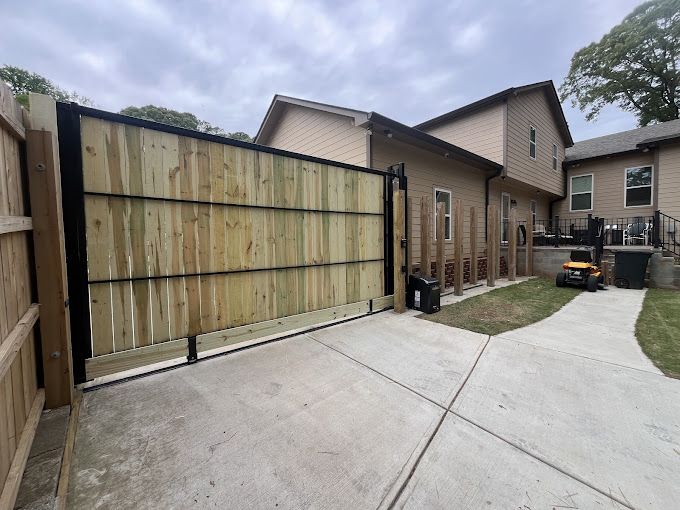
Improper installation. The most common DIY mistakes we’re hired to repair: posts set too shallow (they lean within a year), concrete poured wrong (posts rot at ground level), inconsistent picket spacing, and gates out of square. Gate problems alone account for most of the repair calls we get on DIY fences — a gate that drags or won’t latch usually means the frame was never square to begin with.
Any two of these together, and the DIY savings are gone.
When DIY Actually Makes Sense
We told you we’d be honest, so here it is. The DIY route is a reasonable call when:
The run is short and the ground is flat. A 40-foot section across a level backyard is a very different project than 200 feet on a slope.
You’re installing chain link. Chain link fencing is more forgiving than wood — fewer components, lighter materials, and small errors are less visible.
You’re repairing, not building. Replacing a few pickets or a single rail is a solid weekend project.
You genuinely enjoy this kind of work. For some homeowners, building your own fence is a rewarding experience, and complete control over every board matters to them. That’s legitimate.
Bring in a professional fence contractor when:
The terrain isn’t flat. Uneven terrain is where DIY fences visibly fail — stepped or racked panels on a slope take experience to get right.
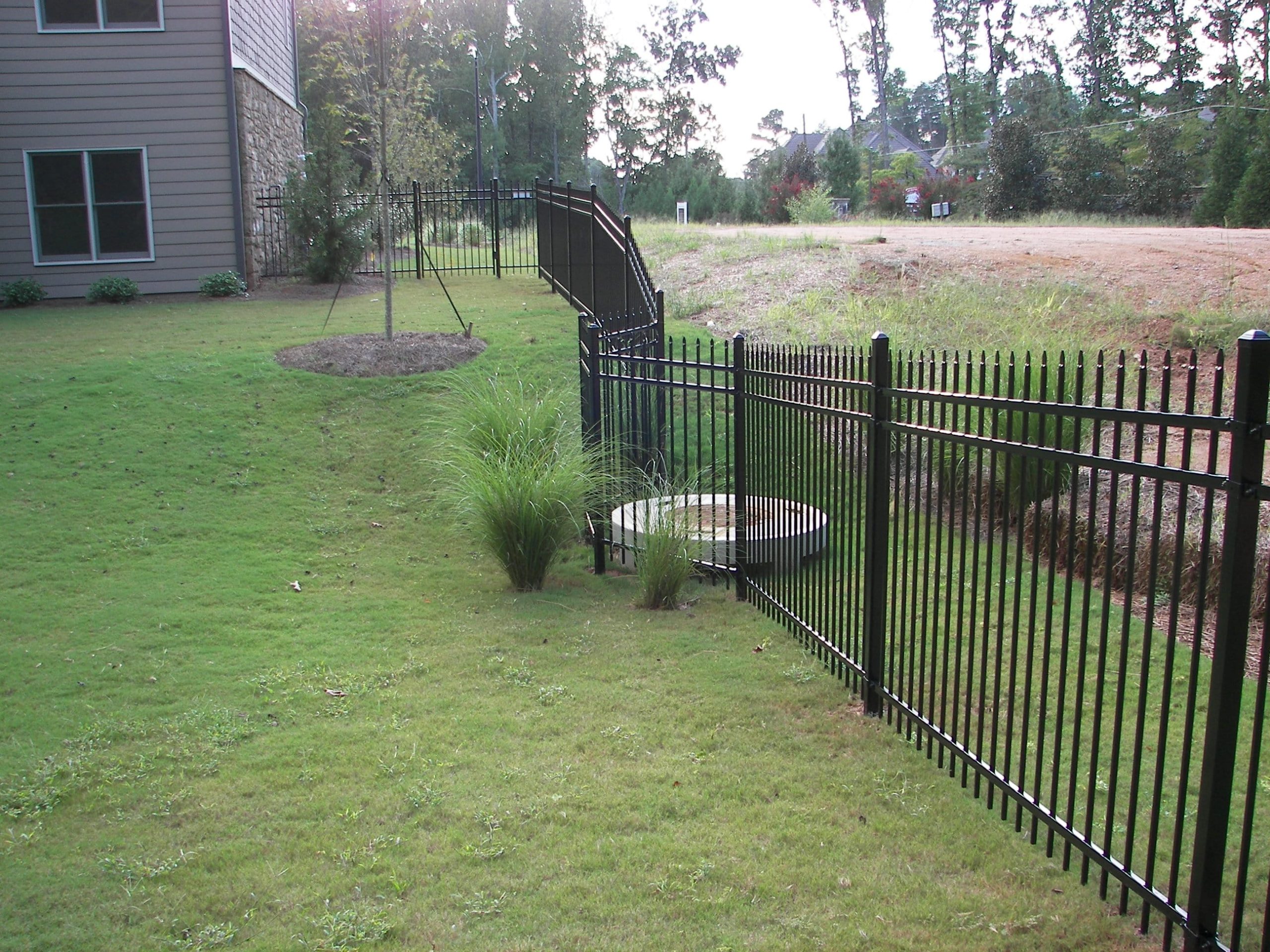
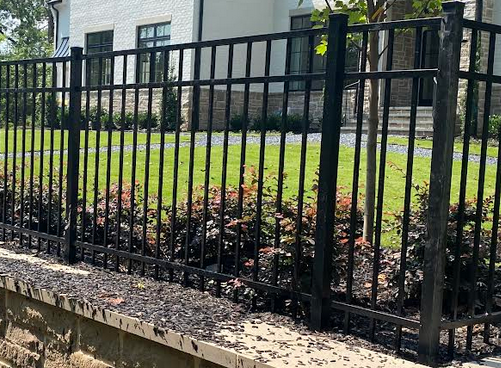
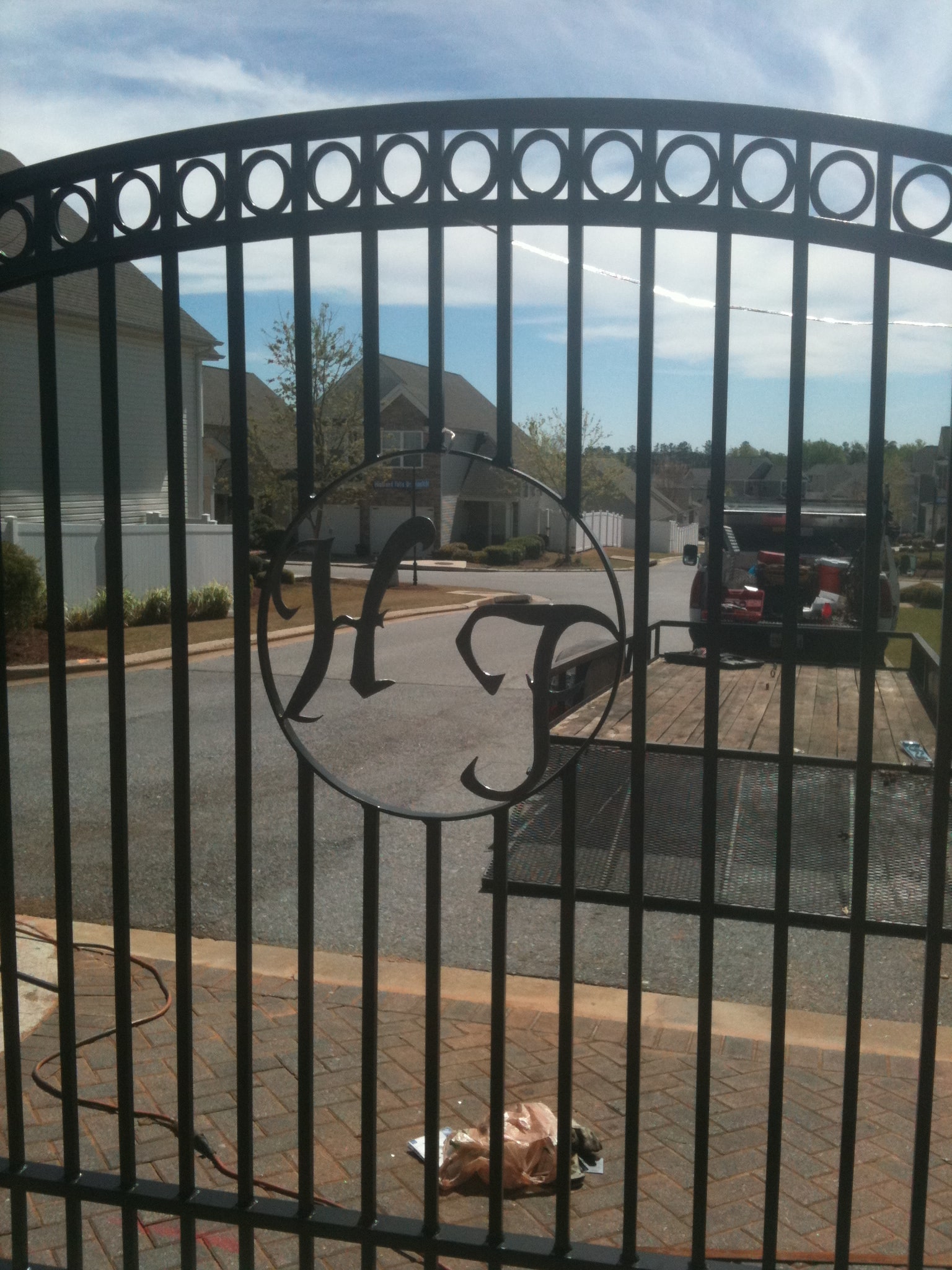
You’re installing vinyl or aluminum. Vinyl fencing panels rack and crack if posts are off by half an inch, and aluminum fencing has zero tolerance for sloppy post spacing. These materials aren’t DIY-friendly, whatever the box store says.
It’s a pool fence. Pool safety fencing has strict code requirements — height, gap spacing, self-closing gates. Getting it wrong isn’t a cosmetic problem. Our pool fence installation handles compliance start to finish.
The project is large or has multiple gates. Project complexity scales fast. Every gate is a chance for something to sag.
You care about resale. A professionally installed fence adds curb appeal and long-term value. A visibly DIY fence — wavy line, mismatched spacing — can do the opposite when appraisers and buyers walk the property.
| Factor | DIY | Professional |
|---|---|---|
| Upfront cost (150 lf, 6' privacy) | $2,300 – $4,500 | $3,750 – $7,500 |
| Your time | 30–50 hours | ~1 hour (walkthrough + quote) |
| Timeline | 2–4 weekends | 1–2 days |
| Permits & code compliance | On you | Handled |
| Warranty | None | 5-year workmanship warranty |
| Risk of costly mistakes | Real | On us, not you |
| Insurance coverage | Homeowner's only | GL + workers' comp |
The Final Verdict
If you’ve got a short, flat run, the right tools, a free weekend or three, and you actually want the project — build your own fence. You’ll save real money and you’ll learn a lot.
If you’ve got slopes, clay, tree roots, an HOA, a pool, more than 100 feet of fence line, or a schedule that doesn’t have four spare weekends in it — the math favors professional installation more than the sticker price suggests. You’re not just paying for labor. You’re paying for a durable fence that’s installed correctly once, backed by a warranty, and done before next weekend.


